Triage Under Fire: Five Dispatch-Tested Rules for Operations Teams Facing Simultaneous Deadlines
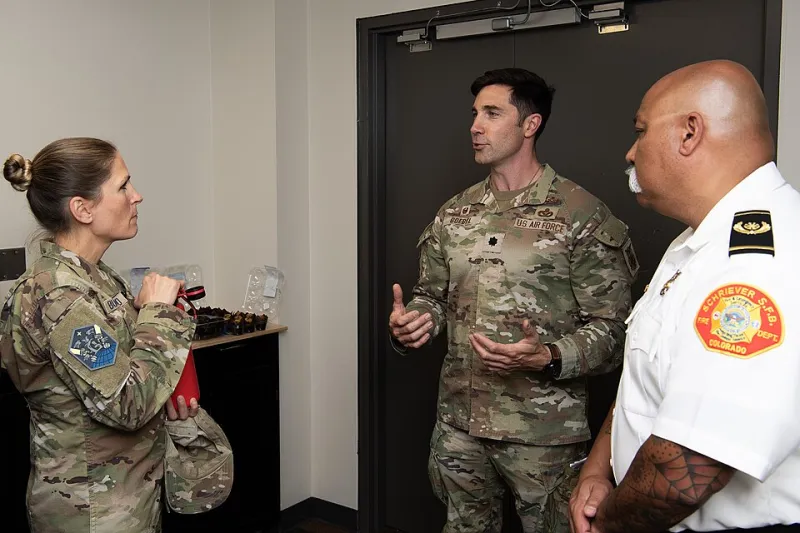
Photo: U.S. Space Force SBD1 by Dennis Rogers, Public domain, via Wikimedia Commons
Operations teams in the UK rarely fail because they cannot work quickly. They fail because they treat every incoming request as equally urgent. The result is a familiar pattern: a delivery date slips, a senior sponsor asks why, and the answer is that three 'critical' jobs arrived in the same week. Emergency dispatchers and air-traffic controllers face a harsher version of this problem every shift. Their value to business is not heroism; it is a disciplined method for sorting demand when demand exceeds capacity.
Why Dispatch Thinking Beats Deadline Thinking
A 999 call handler and a controller at a UK air-traffic control centre do not prioritise by who shouts loudest. They prioritise by consequence, time sensitivity and available resource. That is a transferable discipline. For an operations team, the question is not 'Which task is most urgent?' but 'Which task, if delayed, creates the largest irreversible consequence?'
The distinction matters because most deadline pressure is social before it is operational. A request becomes urgent because a senior person has labelled it urgent, not because the underlying consequence has changed. Dispatch thinking forces the team to separate the label from the risk.
Rule One: Classify by Consequence, Not by Volume
The first rule is to replace a single urgency flag with a small set of consequence categories. A workable model for UK SMEs is four bands: safety or regulatory breach; committed customer or contractual impact; revenue or reputational exposure; and internal convenience. Each item enters the queue with a band, a deadline and a named owner.
This is not a bureaucratic scoring exercise. It is a way to stop a minor internal report from displacing a customer commitment simply because the requester has more seniority. The band should be agreed in advance, not negotiated during the crisis.
Rule Two: Create One Visible Triage Queue
Dispatch desks work from a single picture of demand. Operations teams often work from four: email, chat, a project tool and a spreadsheet maintained by one overworked coordinator. Side-channel escalations then bypass the queue entirely.
A single triage queue does not require new software. It requires an agreed intake route and one person empowered to say, 'That is not in the queue yet.' The queue should show what is waiting, who owns the decision and what has been deliberately deferred. Visibility is the control.
Rule Three: Put a Clock on Every Decision
Emergency dispatch is built around time boxes. A call is categorised, assigned and escalated within minutes, not left to mature. Operations teams should borrow the same discipline by attaching a decision clock to every item: fifteen minutes for a triage call, one working day for an owner decision, three days for a sponsor decision.
The clock is not a guarantee of speed. It is a trigger for action. When the clock expires, the item moves to the next level automatically. This prevents the most common deadline failure: work that is technically in progress but practically waiting for a decision nobody has scheduled.
Rule Four: Escalate by Exception, Not by Anxiety
In a control room, escalation follows a threshold. In many offices, escalation follows mood. A manager who is anxious about a deadline escalates everything; a manager who is avoiding conflict escalates nothing.
A better approach is to define escalation triggers in advance. Examples include a missed decision clock, a dependency owned outside the team, a regulatory or contractual exposure, or a resource conflict that cannot be resolved at team level. When the trigger is met, escalation is expected. When it is not, escalation is optional. This reduces noise and protects the credibility of genuine exceptions.
Rule Five: Drop Deliberately and Record the Loss
The hardest rule is the most important. Dispatch teams do not pretend that every call can be answered at once. They make explicit choices about what waits. Operations teams should do the same by maintaining a drop register: a short list of items deliberately not being progressed, with the reason and the date reviewed.
A drop register changes the conversation. Instead of discovering at the end of the month that something was silently ignored, the team can say on day one that a lower-consequence item has been parked to protect a higher-consequence commitment. Deliberate drops are a management decision. Silent drops are a deadline debt that compounds.
The Five-Step Playbook in Practice
- Capture all demand in one place for forty-eight hours. Do not filter yet.
- Score each item on consequence and reversibility, not on the seniority of the requester.
- Assign a decision owner and a decision clock to every item above the internal-convenience band.
- Apply escalation triggers consistently and record every escalation.
- Publish the drop register weekly so that deferral is visible and reviewable.
What to Avoid
Do not copy dispatch language into the office. Calling a colleague a 'controller' or a task a 'code red' adds theatre, not clarity. Do not use triage to avoid accountability; the method only works when named owners make real decisions. And do not let the queue become a second project plan. It is a decision tool, not a resourcing fantasy.
A Discipline, Not a Performance
The deadline is rarely missed at the end. It is missed at the point of triage, when a team decides implicitly that everything matters equally. UK operations teams under pressure do not need more urgency. They need a repeatable way to decide what gets done, what gets escalated and what gets dropped. That is the dispatch lesson worth borrowing.